
Cost to Add AI Features to an Existing App: 2026 USA Guide
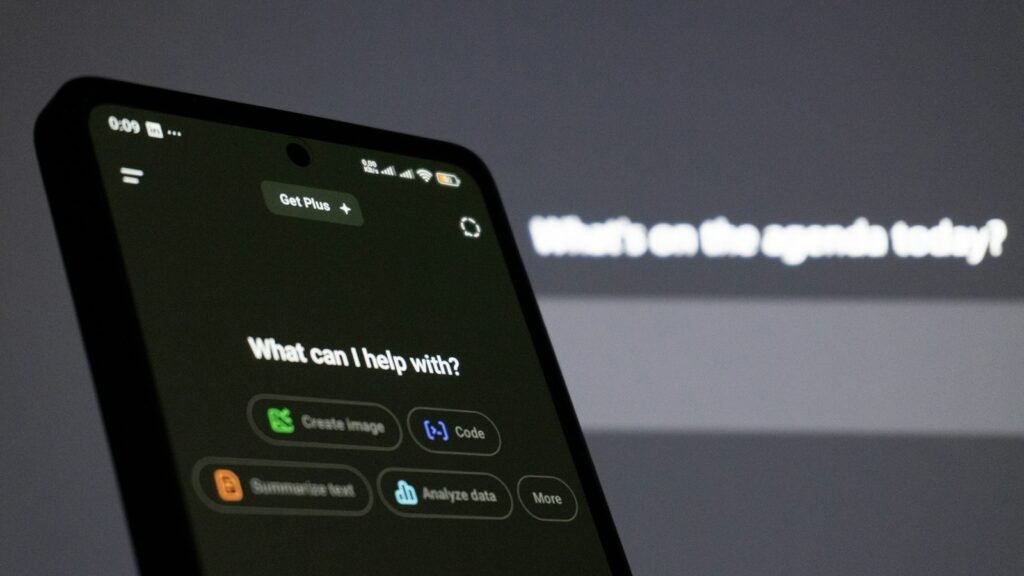
The cost to add AI features to an existing app in the USA typically runs $4,000–$12,000 for an in-app assistant trained on your own data, $4,000–$10,000 for AI search and $5,000–$15,000 for document processing. Recommendation and prediction features cost $10,000–$30,000. Model usage then adds about $5–$300 a month for most small-business apps, so the build is the real expense, not the AI bill.
Your app already works. Customers book, pay and message through it, and now you want it to answer questions, find things faster or read documents on its own. We add these features to existing web and mobile apps for small businesses, so this guide shares the price tiers we quote and the order we recommend building in.
The cost to add AI features depends more on your current code than on the AI model. So this guide covers what each feature costs, a what-to-add-first decision table, a worked example of the monthly API bill and the hidden costs that push quotes up. All ranges are typical mid-market agency prices in USD for 2026.
In this guide
- Cost to Add AI Features by Feature Type: 2026 Price Table
- What to Add First: Decision Table
- What AI Features Cost to Run Each Month (Worked Example)
- Why Your Existing Code Decides the Cost to Add AI Features
- Hidden Costs Most Quotes Leave Out
- How We Add AI Features to an Existing App, Step by Step
- Mistakes That Raise the Cost to Add AI Features
- Frequently Asked Questions
Cost to Add AI Features by Feature Type: 2026 Price Table
We price AI additions as separate features, each with its own scope and timeline. The table shows our typical ranges for USA small businesses, consistent with our mobile app development pricing. Every project starts with a short readiness audit, because nobody can quote an AI feature for code they have not read.
| AI feature | What it includes | Typical cost (USD) | Typical time |
|---|---|---|---|
| AI readiness audit | Review of your API, database and data quality; a written plan with the first feature to build | $500–$1,500 | 2–4 business days |
| In-app assistant on your data | Chat that answers from your own records and help content, with human handoff and usage limits | $4,000–$12,000 | 3–6 weeks |
| AI search | Semantic search over products, listings or records; filters and ranking kept | $4,000–$10,000 | 2–5 weeks |
| Smart follow-ups | AI-drafted replies, reminders and lead follow-up inside your app, with workflows and CRM sync | $2,500–$8,000 | 2–4 weeks |
| Document processing | Extraction from one document type (invoices, forms, IDs), review screen, validation rules | $5,000–$15,000 | 3–6 weeks |
| Recommendations or prediction | Personalized suggestions, no-show or churn prediction, trained on your usage history | $10,000–$30,000 | 6–12 weeks |
How do these compare with the market? Apptitude’s April 2026 guide prices a basic chatbot at $5,000–$10,000 and an advanced one at $15,000–$25,000, AI search at $8,000–$30,000 and document processing at $15,000–$50,000. Aalpha’s guide, updated in November 2026, lists basic chatbots at $5,000–$15,000 and semantic search at $20,000–$50,000.
Our ranges sit at the lower end because we scope one feature at a time and reuse the app’s existing API. Compare scope, not just price, when you weigh quotes. A $4,000 assistant with handoff and limits is a different product from a $15,000 one with memory and analytics.
What to Add First: Decision Table
Most owners ask for a chatbot first, but the best first feature is the one that removes a task your staff already do by hand. Look at your support inbox, your search logs and your admin screens for the signal. Then match it to the table below.
| Signal in your app today | Add this first | Typical cost (USD) | What you save |
|---|---|---|---|
| Same 20 questions arrive by email or chat every week | In-app assistant on your data | $4,000–$12,000 | Support hours; faster answers after hours |
| Users search, get zero results, then leave | AI search | $4,000–$10,000 | Lost sales and bookings from bad search |
| Staff retype invoices, forms or receipts into the app | Document processing | $5,000–$15,000 | Data-entry hours and typing errors |
| Leads and quotes go quiet because nobody follows up | Smart follow-ups | $2,500–$8,000 | Lost deals; time spent chasing |
| Thousands of users and clear usage history | Recommendations or prediction | $10,000–$30,000 | Higher order value; fewer no-shows |
| Under 1,000 active users | Rules-based logic first, AI later | $1,000–$3,000 | Avoids paying for a model your data cannot train |
Here is how the table works, using an illustrative example rather than a client. Imagine a home-cleaning app called Sparkle Cleaning where customers message the same questions about pricing and arrival windows. The right first feature is a $5,000 assistant connected to the booking database, not a $20,000 recommendation engine.

Need help with this? AK Softs Digital builds websites, mobile apps and AI automation for small businesses in the USA, UK, UAE and Australia. Message us on WhatsApp or get a free quote in 24 hours.
What AI Features Cost to Run Each Month (Worked Example)
Owners often fear the monthly AI bill more than the build. For most small-business apps, that fear is misplaced, because small models are now cheap. Anthropic’s pricing page lists Claude Haiku 5.5 at $0.10 per million input tokens and $0.50 per million output tokens for prompts up to 100,000 tokens, and Claude Sonnet 5.5 at $2 and $10.
Take an in-app assistant that handles 5,000 conversations a month, four turns each. Each turn sends about 3,000 input tokens (the question plus retrieved records) and returns about 250 output tokens. That is 60 million input tokens and 5 million output tokens a month.
- On Haiku 5.5: 60 × $0.10 + 5 × $0.50 = about $8.50 a month.
- On Sonnet 5.5: 60 × $2 + 5 × $10 = about $170 a month.
- Plus storage: a managed vector store or database extension typically adds $0–$100 a month at this volume.
So the running cost for a busy assistant is closer to a phone bill than a salary. Prices change often, so check the provider’s page before you budget. Apptitude reports $50–$500 a month for chatbots under 10,000 monthly users, which matches what we see when a larger model is used throughout.
Why Your Existing Code Decides the Cost to Add AI Features
Adding AI to an existing app is not the same job as building AI into a new one. Aalpha estimates that legacy systems add 25–40% more effort than a fresh build. In our experience, four things explain most of that gap.
- Does your app have an API? An assistant can only answer booking questions if it can read bookings. Apps with no clean API need one built first, usually $1,500–$4,000.
- Can it do slow work? A model call takes one to ten seconds. Apps that expect instant responses need background jobs and loading states added.
- Who may see what? The assistant must respect user permissions, so one customer never sees another’s data. Apps with weak access rules pay for that fix first.
- Is the data clean? Duplicated records, empty fields and PDFs saved as images all push the price up, because the model answers from what it is given.
If your app was built with an AI builder such as Lovable or Bolt, read our cost to fix a vibe coded app guide first. Those apps usually need their database policies fixed before any AI feature touches customer data.
Hidden Costs Most Quotes Leave Out
Two apps in the same tier can differ by $5,000 because of items that never appear in a one-line quote. Ask about each of these before you sign, and estimate your project cost with our calculator to set a starting budget.
- Prompt tuning and edge cases. The first version answers 80% of questions well. Reaching 95% takes two to four weeks of reviewing real conversations, typically $800–$2,500.
- Evaluation and monitoring. You need logs of what the model said and a way to flag bad answers. Budget $500–$1,500 for setup plus a small monthly logging tool.
- Abuse protection. Rate limits and spend caps stop one user from running up your API bill overnight. This is cheap to add and expensive to skip.
- Model migration. Providers retire models every year or two. Plan a day of re-testing each time, rather than being surprised.
- Ongoing maintenance. Biz4Group puts AI maintenance at 15–25% of the build cost per year. Our app maintenance cost guide shows how that fits a normal care plan.
How We Add AI Features to an Existing App, Step by Step
The process below is what keeps the cost to add AI features predictable. Each step produces something you can test before the next one starts.
- Readiness audit (days 1–4). We read your API, database and permissions, then pick the first feature using the decision table above.
- Data access layer (week 1). The model gets a narrow set of tools: read this customer’s bookings, search these products. It never gets your whole database.
- First working version (weeks 2–3). The feature runs on your staging app with real data and a small model. You test it with your own questions.
- Tuning and guardrails (weeks 3–4). We review transcripts, fix wrong answers, add human handoff, rate limits and spend caps.
- Release and monitoring (week 4–6). The feature ships to a share of users first, with logging, and then to everyone.
For features that need to reach several systems, such as your CRM, calendar and payment provider, we connect them through our AI automation services. That keeps the app code small and the integrations easy to change later.
Mistakes That Raise the Cost to Add AI Features
- Starting with the biggest feature. A recommendation engine on an app with 300 users has nothing to learn from. Start with the assistant or search instead.
- Calling the model from the phone app directly. That puts your API key in every user’s hands. All calls should go through your backend with limits.
- Giving the model your whole database. Narrow tools are cheaper, safer and more accurate than dumping every table into a prompt.
- Skipping the review screen. Document extraction is never 100% accurate, so a human must be able to correct fields before data is saved.
- Buying a generic chatbot widget. A widget that cannot read your bookings answers nothing useful. Our AI chatbot cost guide compares the options.
- No budget for tuning. If a quote has no line for reviewing real conversations after launch, the feature will stay at version one.
Avoid these and the first feature usually pays for itself in saved staff time within a few months. A clear scope with our development team also means the second feature reuses the data layer from the first, so it costs less.
Key Takeaways
- Typical 2026 USA cost to add AI features to an existing app: assistant $4,000–$12,000, AI search $4,000–$10,000, smart follow-ups $2,500–$8,000, document processing $5,000–$15,000, recommendations $10,000–$30,000.
- Model usage for a busy assistant runs about $8.50 a month on Claude Haiku 5.5 and about $170 on Sonnet 5.5, so the build is the main expense.
- Legacy code adds 25–40% effort; a missing API, weak permissions or messy data is what moves your quote.
- Add the feature that replaces a task staff do by hand today, and leave recommendations until you have thousands of users.
- Budget 15–25% of the build cost per year for tuning, monitoring and model changes.
- Never call the model from the phone app directly, and never give it your whole database.
Frequently Asked Questions
How much does it cost to add AI features to an existing app?
In 2026, the cost to add AI features at a USA agency is typically $4,000–$12,000 for an in-app assistant on your own data, $4,000–$10,000 for AI search, $5,000–$15,000 for document processing and $10,000–$30,000 for recommendations. A readiness audit of $500–$1,500 comes first and sets the exact quote.
Is it cheaper to add AI to my current app or rebuild it with AI built in?
Adding is almost always cheaper if the app has a usable API and sound permissions. A rebuild only makes sense when the database cannot represent your business or every change breaks something else. Even then, add the AI feature after the rebuild, not during it.
How much does the AI cost per month after launch?
For most small-business apps, model usage is $5–$300 a month. A busy assistant handling 5,000 conversations costs about $8.50 a month on Claude Haiku 5.5 and about $170 on Sonnet 5.5 at current list prices. Logging tools and a vector store can add $0–$100 more.
Timing and safety questions
How long does it take to add an AI feature to an app?
Smart follow-ups take 2–4 weeks, an assistant or AI search 2–6 weeks and document processing 3–6 weeks. Recommendation and prediction features take 6–12 weeks because they need your usage history prepared and tested. A missing API adds one to two weeks at the start.
Will adding AI expose my customers’ data?
Not if it is built properly. The model should only receive the records the signed-in user may already see, through narrow backend tools, and never the whole database. Also check the provider’s data terms, because business API plans usually exclude your data from training, but you should confirm that in writing.
Get a Fixed Quote for Your First AI Feature
AK Softs Digital adds AI assistants, search, follow-ups and document processing to existing apps as part of our mobile app development and web app services. With 175+ client reviews and a 4.9 rating, we will audit your app and tell you plainly which feature to build first and what it will cost. Book a free consultation and bring your most common customer questions.

Anees Dilawar
Founder & CEO of AK Softs Digital. MS Computer Science, 10+ years teaching and building software, and 6+ years delivering WordPress, Flutter and AI automation projects for clients in the USA, UK, UAE and Australia.
AI Automation
Get a clear plan and a fixed quote in one call
Want this automated for your business? We build n8n, MCP and AI receptionist workflows that save hours every week.